
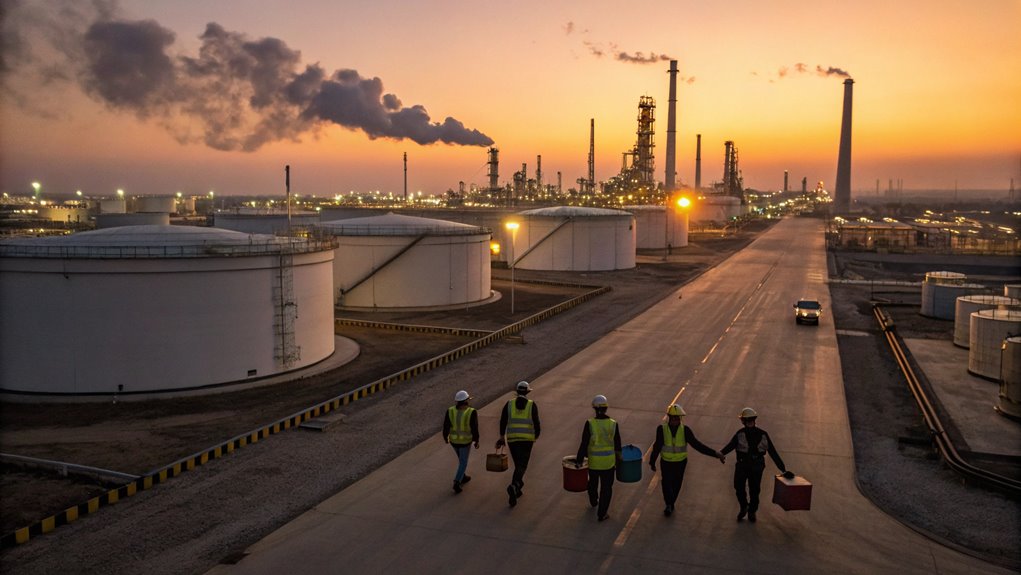
The current wave of layoffs in the oil and gas industry, despite soaring production levels, can be attributed to the ongoing quest for cost savings. This trend is transforming the landscape of major energy companies as they increasingly adopt automation and advanced technology, leading to a significant reduction in their workforce. The most recent example of this trend is BP, which announced it will cut about 4,700 staff positions and 3,000 contractor roles. This decision is part of a broader plan to "simplify and focus" the company.
CEO Murray Auchincloss emphasized in an email to staff, "I understand and recognize the uncertainty this brings for everyone whose job may be at risk, and also the effect it can have on colleagues and teams." This move is part of BP's multi-year program aimed at strengthening competitiveness and building resilience through cost reduction and performance improvement.
Moreover, the company is shifting its focus towards digitization and renewable energy, with plans to reduce costs by about $2 billion by the end of next year and save at least $500 million this year. The transition also includes moving work from the UK and the U.S. to countries like India, Malaysia, and Hungary to eliminate redundant positions.
According to Auchincloss, the company's goal is to position BP to grow as a simpler, more focused, higher-value company. "We have got more we need to do through this year, next year and beyond, but we are making strong progress as we position BP to grow as a simpler, more focused, higher-value company," he stated.
This trend of workforce cuts in the oil and gas industry is not unique to BP. It reflects a broader industry shift driven by factors such as price volatility, rising costs, the adoption of AI, climate change, and energy transition agendas.
Sources:
- https://www.businessinsider.com/bp-cutting-thousands-jobs-cost-cuts-oil-giant-2025-1
- https://www.powermag.com/bp-cutting-thousands-of-jobs-in-effort-to-reduce-costs/
- https://www.offshore-energy.biz/workforce-cuts-on-the-rise-oil-gas-giants-cost-saving-quests-fuel-layoffs-wave/
The U.S. oil and gas industry is experiencing a paradox: record-breaking production levels are occurring alongside a decline in jobs.
According to the latest data from the U.S. Bureau of Labor Statistics, employment in the oil and gas extraction sector fell by 1,000 jobs in September, marking a total loss of 10,000 jobs since the beginning of the year.
This decline comes despite the fact that U.S. crude oil production reached an all-time high of 13.2 million barrels per day in August, according to the Energy Information Administration.
Industry experts attribute this disconnect to several factors, including increased automation and efficiency in extraction processes, as well as a shift toward more capital-intensive operations.
As companies invest in technology to boost productivity, they are able to produce more oil and gas with fewer workers.
Additionally, many companies are focusing on cost-cutting measures to improve profitability, which often leads to workforce reductions.
The trend is concerning for workers and communities that rely on the oil and gas sector for jobs and economic stability.
Surveys indicate that operational efficiency remains a top priority for 52% of industry decision-makers, driving continued workforce optimization efforts.
While the industry may be thriving in terms of production, the decline in employment raises questions about the long-term sustainability of these jobs and the overall health of the workforce.
As the industry continues to evolve, it remains to be seen how these changes will impact employment levels and the future of the oil and gas sector.