
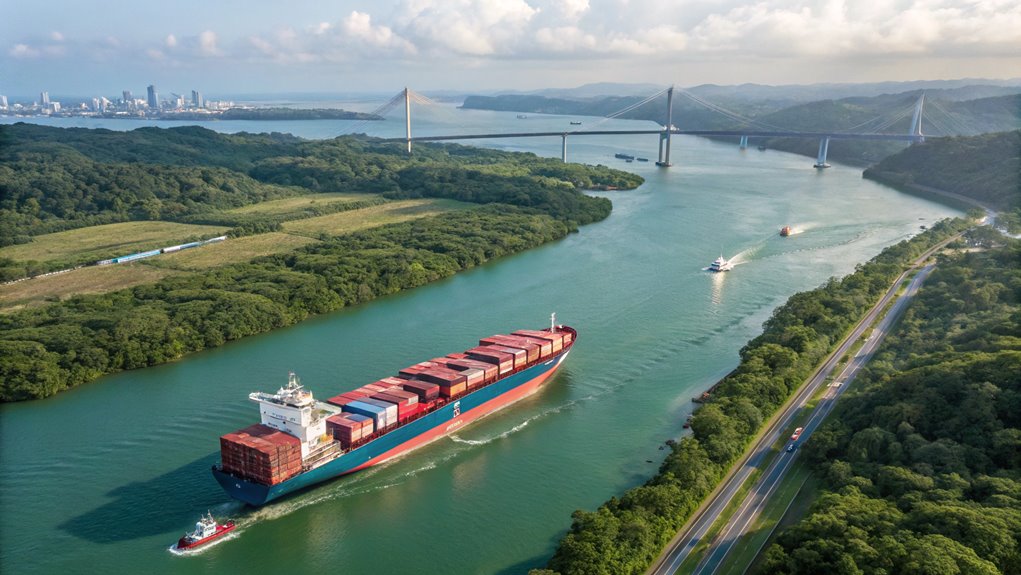
Panama has staunchly refuted claims made by the US State Department that a free passage agreement has been reached for US government vessels transiting the Panama Canal. This diplomatic spat underscores the intricate relationship between these long-standing allies and raises fundamental questions about control over one of the world's most crucial waterways.
The controversy began when the US State Department announced on X (formerly Twitter) that Panama had agreed to waive toll fees for US government ships, a move that would allegedly save the US government millions of dollars annually. However, the Panama Canal Authority swiftly countered this assertion, stating on its official social media account that no adjustments had been made to the tolls or fees charged for canal use.
Panama's President, José Raúl Mulino, was forthright in his rejection of the US claim, telling reporters during a weekly press conference, "I completely reject that statement," and asserting that the government could neither set the fees nor exempt anyone as it was the sole responsibility of the board of the authority.
According to José Raúl Mulino, "The statement was based on a falsity, and that's intolerable." This reaction underscores the firm stance taken by Panama in defending its sovereignty over the canal.
The dispute also touches on broader geopolitical tensions, with the US expressing concerns over China's influence in the operation of the Panama Canal. Secretary of State Marco Rubio delivered a strong message to President Mulino, warning that Panama must reduce Chinese influence over the canal area or face potential retaliation from the US.
The situation remains complex, with no clear resolution in sight. The Panama Canal Authority has expressed a willingness to engage in dialogue with US officials regarding the transit of warships, but it remains firm in its assertion that it has not agreed to waive fees for US government vessels.
Panama pushes back against the US statement on canal fees, asserting that no agreement exists for free passage through the Panama Canal for government vessels. The US State Department announced it had secured such an arrangement, but the Panama Canal Authority quickly refuted this claim.
This dispute arises amidst heightened tensions over Chinese influence in the region. The US has expressed concerns about a Hong Kong-based company operating two ports at the canal's ends since 1997. Currently, ships pay between $300,000 and $1 million per crossing, with US Navy vessels making about 40 transits annually, excluding aircraft carriers which are too large.
This isn't the first controversy over canal operations since Panama gained full control of the waterway in December 1999.