
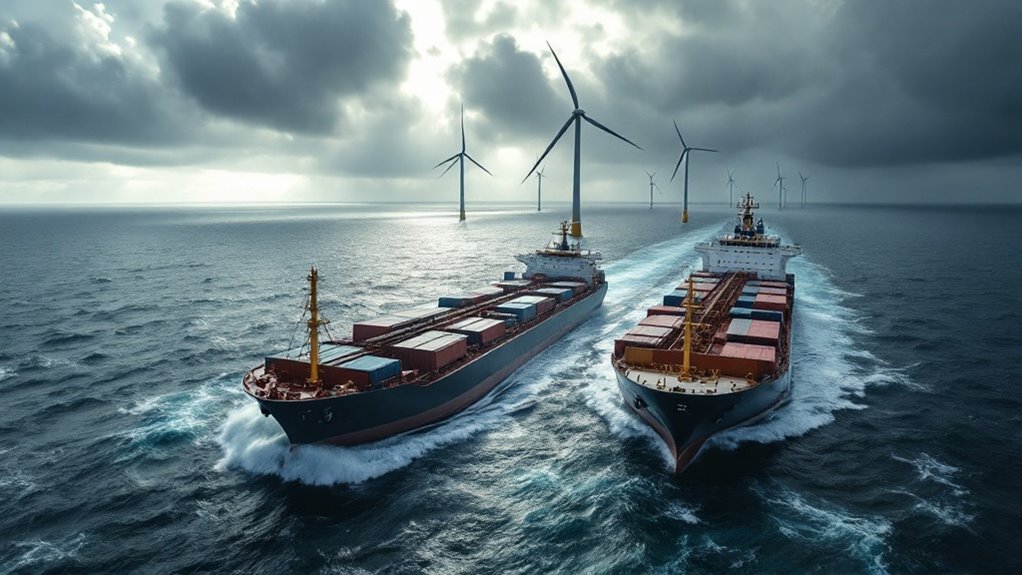
While you might think maritime accidents are rare in today's high-tech world, recent collisions in the North Sea tell a different story. You'll notice the growing concern among safety experts as vessels navigate an increasingly crowded seascape of wind farms, pipelines, and energy hubs. With billions invested in critical infrastructure and marine ecosystems at stake, you'll want to understand how these incidents could impact everything from your energy bills to environmental sustainability.
While the North Sea has long been an essential hub for Europe's energy production, recent collisions between vessels have sparked serious concerns about maritime safety and environmental protection in these busy waters.
You'll find a complex network of wind farms, pipelines, and energy hubs scattered across this maritime region, making any accident potentially catastrophic for both the environment and energy security.
The latest incident, involving a cargo ship and a tanker carrying jet fuel, has highlighted the pressing need for enhanced safety measures. The ruptured cargo tank caused a concerning release of fuel into the surrounding waters. You might be wondering about the environmental impact – while authorities confirmed that no sodium cyanide containers were compromised, the collision still posed significant risks to protected marine areas and species like the harbor porpoise.
You're looking at a region that's targeting over 300 GW of offshore wind power by 2050, with massive infrastructure projects already underway.
That's why protecting these assets isn't just about preventing environmental disasters – it's about securing Europe's energy future. The existing infrastructure, including the NGT pipeline and various energy hubs, represents billions in investments that can't afford to be compromised by shipping accidents.
If you're concerned about safety protocols, you should know that international maritime regulations govern these waters, requiring regular inspections and safety audits.
But recent events suggest we need to do more. The U.K. Coastguard's quick response to establish exclusion zones and assess pollution risks shows how seriously these incidents are taken, but prevention is always better than response.
You can expect to see increased focus on crew training, infrastructure resilience, and cross-border coordination as authorities work to prevent future collisions in these increasingly crowded waters.