
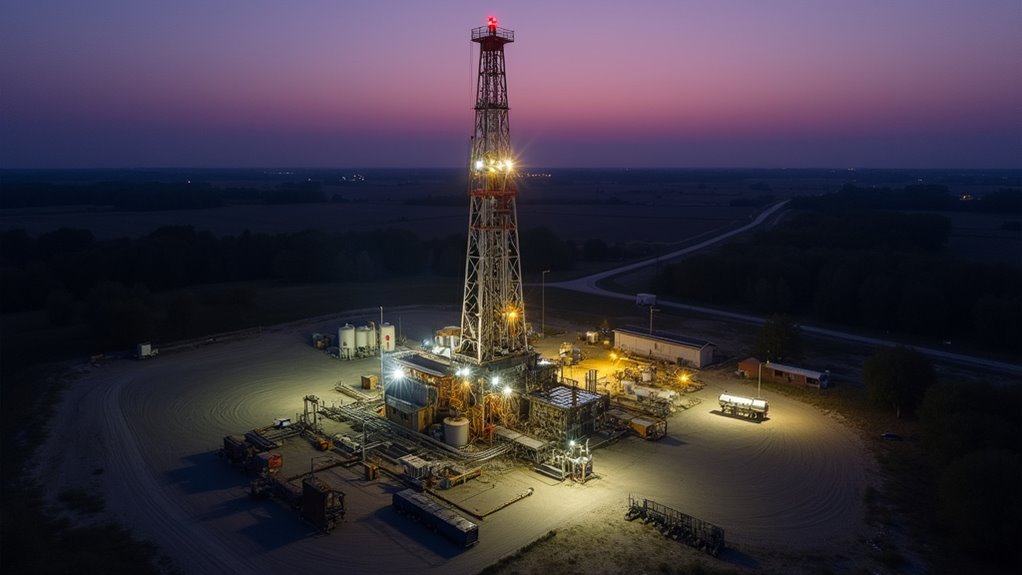
You'll find the extended well test at Petrogas Abbey to be a fascinating glimpse into the future of regional energy production. As engineers prepare to evaluate the reservoir's long-term potential, they're armed with cutting-edge equipment and detailed plans to measure flow rates, pressure data, and production capabilities. The results won't just determine this well's success – they'll shape development strategies across the entire field and could transform local energy prospects.
Energy industry watchers are keeping a close eye on Petrogas Abbey as the company prepares for an essential extended well test that could shape its future development plans. You'll find that these tests are critical for understanding just how much oil and gas might be available and how best to extract it.
When you're dealing with appraisal wells like this one, you're fundamentally getting a sneak peek at what's happening deep underground. The company will use specialized equipment, including electrical submersible pumps and high-tech monitoring systems, to gather detailed information about the reservoir's behavior and potential production rates. The team expects to achieve oil flow rates of up to 20,000 barrels per day during the testing phase.
You might wonder why they don't just start producing right away. Well, it's a bit like test-driving a car before buying it – you want to know exactly what you're getting into. The extended well test will show how the reservoir performs over time, helping Petrogas Abbey make smart decisions about their future investments in infrastructure and operations.
During the test, you'll see temporary production facilities set up, complete with water treatment systems and safety measures to protect the environment. The company's taking no chances – they've spent months planning this operation and have all the necessary contracts in place to guarantee everything runs smoothly.
What makes this test particularly exciting is how it could impact Petrogas Abbey's development strategy. If the results are positive, you might see them move forward with either a phased approach or a full-field development plan.
The data they collect will help reduce uncertainties and risks, making it easier to determine if this field could be commercially viable. It's an important step that could lead to significant developments in the region's energy production capabilities.