
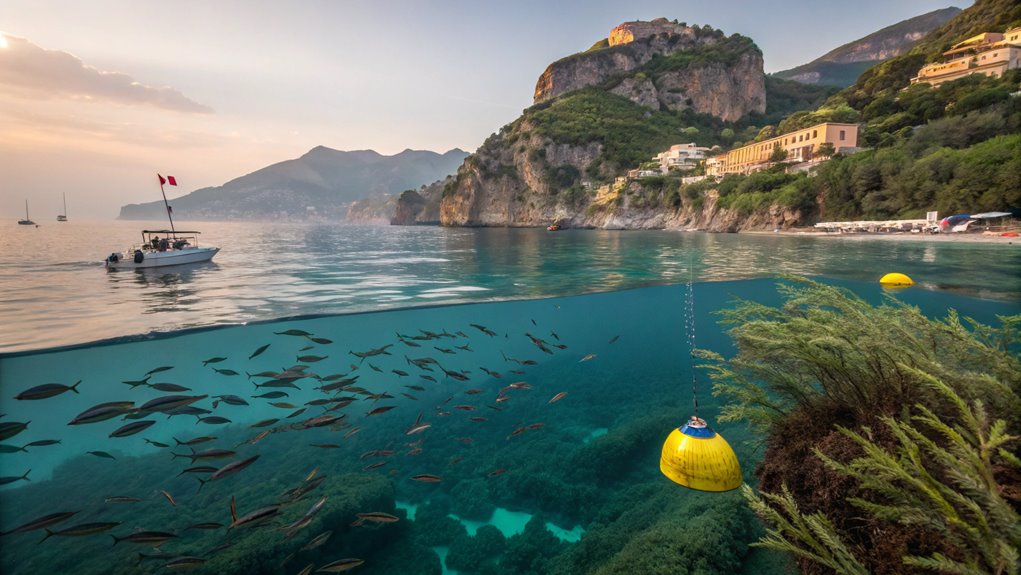
Amidst escalating worries regarding the repercussions of climate change, Fugro has clinched a critical contract focused on monitoring metocean conditions to protect Italy's delicate marine environments and coastal regions. This comprehensive project entails the deployment of state-of-the-art buoys along with sub-ocean stations engineered to resist tsunamis, enabling meticulous observation of environmental changes. While the goal to shield Italy's shorelines is evident, doubts remain—will this strategy succeed, and how might it impact the rich marine biodiversity and Italy's celebrated coastal heritage? The progression of this endeavor urges us to reflect on…
Project Overview
As part of Italy's commitment to enhancing the sustainability and resilience of its marine ecosystems, Fugro, in collaboration with Poliservizi Srl and Prisma, has been contracted to design and implement an extensive metocean monitoring network. This is a part of ISPRA's Marine Ecosystem Restoration Project, aimed at restoring Italy's marine environments and fortifying its observation systems. The project includes the installation of 11 SEAWATCH Wavescan buoys, meticulously engineered to monitor essential parameters such as wave height, current velocity profiles, air temperature, and wind speed. Additionally, two seabed tsunami early-warning stations will be deployed, providing an extra layer of safety for Italy's coastal regions. Think of these buoys like vigilant sentinels, keeping a watchful eye on Italy's waters, providing real-time data that's critical for maritime and coastal management. This dynamic setup is not just about securing immediate benefits, it's a proactive step towards understanding and mitigating the impacts of climate change on Italy's marine habitats.
The ROCA Network not only gathers meteorological data but also fosters international cooperation in environmental protection. Additionally, this initiative adds to the industry trends where companies like Fugro are recognized for their leadership in offshore digital video recording and innovate sub-seat technology, enhancing the reliability and autonomy of underwater monitoring systems. Through this network, we're crafting a more detailed picture of our environment with each buoy's beat.
Environmental Impact
Given Italy's ongoing commitment to marine ecosystem sustainability, the environmental impact of the new metocean monitoring network is profound.
Italy's coasts are littered with pollutants from industry, plastic waste from rivers, and toxic runoff from farms. This pollution harms sea life, depletes oxygen, and creates a grim situation for biodiversity.
Yet, hope isn't lost. Italy is stepping up its game with stronger laws against pollution, promoting eco-friendly industries, and expanding protected sea zones. Bioaccumulation of contaminants in marine organisms jeopardizes their health and disrupts the food web.
Imagine turning the tides of plastic pollution in Venice Lagoon into restoration. The MER Project by Fugro plays a big role here; it's like giving a doctor a better stethoscope to listen to the heartbeat of our oceans.
Sure, the sea is big, but these efforts are like little drops that create ripples of change.
By safeguarding our marine areas, Italy isn't just cleaning up, but it's showing the Mediterranean—and the world—how to care for our oceans' future.
This monitoring gig? It's like planting seeds for a healthier aquatic world.
Technical Implementation
The Italian government, through the MER Project, has commissioned Fugro to enhance Italy's marine ecosystem monitoring capabilities by implementing the Real-time Oceanographic Coastal Array (ROCA) network. This network involves deploying 11 SEAWATCH Wavescan buoys in a quartet of Italy's seas: the Adriatic, South Ionian, Tyrrhenian, and Ligurian. Each buoy collects data on wave heights, wind speeds, water depths, and other metocean parameters essential for understanding marine health. In-depth analysis of seagrass distribution will provide crucial data for modeling the Mediterranean currents, enabling a more accurate depiction of these vital marine ecosystems. They're designed to float in the sea, taking in information and relaying it back through a satellite connection.
You might be wondering, how does this all work? Well, the buoys use tech similar to what you might find in your car's sensors and weather gadgets on your smartphone. They continuously transmit real-time data to a brand-new data hub set up by ISPRA, Italy's environmental protection agency.
It's a bit like receiving live reports from weather stations, but these stations are bobbing about in our beautiful Mediterranean waters. The information gathered is critical for project managers aiming to protect and revive our seas, ensuring we keep Italy's coasts and marine life thriving for future generations to enjoy.