
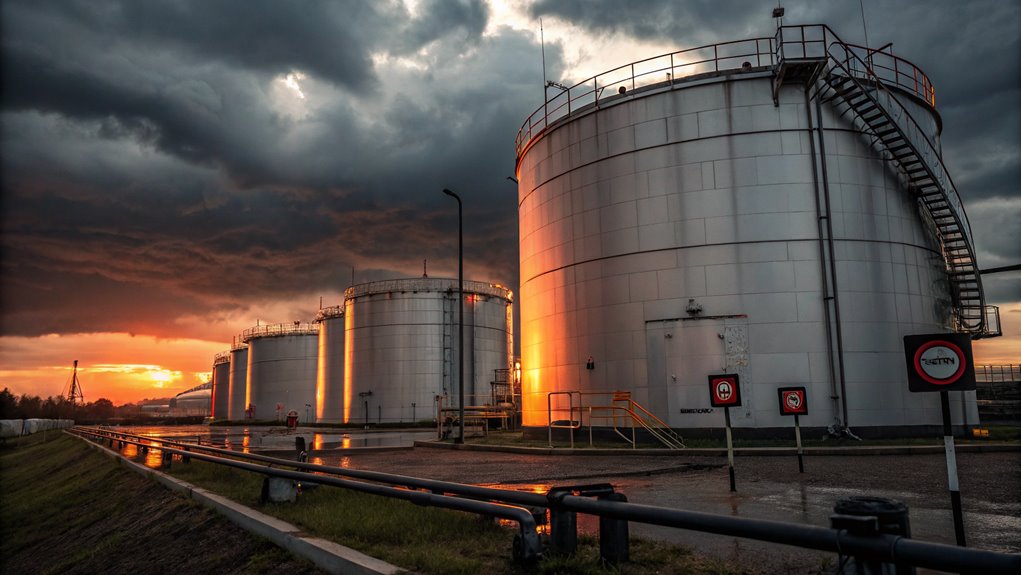
The UK's gas storage situation has reached a critical point, with reserves now 26% lower than last year's figures, leaving the country with less than a week's worth of demand in store. This precarious situation has prompted Centrica's CEO, Chris O'Shea, to voice serious concerns about the nation's ability to meet its energy needs.
The current crisis is largely attributed to plunging temperatures and high demand for gas-fired power stations, exacerbated by the end of Russian gas pipeline supplies through Ukraine on December 31, 2024. This has resulted in UK storage sites being around half full, a situation echoed across Europe, where storage levels are at 69% capacity, down from 84% at the same time last year.
Energy storage plays a crucial role in keeping homes warm and lights on, particularly during periods of high demand and low renewable energy output. O'Shea emphasizes the importance of investing in storage capacity, stating, "Energy storage is what keeps the lights on and homes warm when the sun doesn't shine and the wind doesn't blow, so investing in our storage capacity makes perfect economic sense. We need to think of storage as a very valuable insurance policy".
Centrica plans to invest £2 billion in upgrading and redeveloping the Rough gas storage facility, which holds half of the UK's gas storage capacity. However, this investment hinges on the implementation of a cap and floor model for long-duration energy storage, similar to that used for other forms of energy storage. O'Shea notes, "We need the regulatory framework which covers other types of energy storage. Nothing more, nothing less. Just equal treatment, and no government money at all".
The urgency of addressing the UK's gas storage issues is underscored by O'Shea's concern that the country is "too close to not being able to keep the lights on for comfort". As the UK navigates this challenging winter, it is clear that a strategic approach to energy storage is essential for ensuring the nation's energy security.
UK Gas Storage Crisis
The winter of 2025 has starkly illuminated the severe vulnerabilities in the UK's gas storage infrastructure. Storage levels are now 26% lower than last year, with facilities only half full, amounting to less than a week's worth of gas demand. This critical situation has been exacerbated by an early start to winter, elevated demand from gas-fired power stations, and the challenges posed by persistently high gas prices, making it particularly difficult to replenish storage during the recent Christmas period.
The UK's heavy reliance on gas for residential heating and electricity generation, combined with its limited storage capacity, heightens the country's vulnerability to supply disruptions, particularly during extreme weather conditions. The primary sources of the UK's gas include domestic production from the North Sea, imports via pipelines from Europe, and liquefied natural gas (LNG) shipped from global suppliers. However, this reliance on imports, coupled with low storage levels, presents a significant risk to energy security. The UK's just-in-time supply model makes the country especially susceptible to price volatility and supply constraints.
Commenting on the situation, Jess Ralston, Head of Energy at the Energy and Climate Intelligence Unit (ECIU), noted: "Gas prices remain volatile as we approach the fourth year of the gas crisis and, as the North Sea continues its inevitable decline, unless the UK starts to reduce its demand for gas then we'll just become more dependent on imports from abroad, with prices set by the international markets".
Ralston further emphasized that energy independence and stabilized bills can be achieved by insulating houses, transitioning from gas boilers to electric heat pumps, and expanding renewable energy sources to reduce reliance on gas for power.
This highlights the urgent need for the UK to diversify its energy strategy and invest in storage infrastructure to mitigate the risks associated with low gas storage levels and high dependence on imports. Without these measures, the country may struggle to meet its energy demands, particularly during harsh winters.