

You’re witnessing a remarkable shift in how we power our world through massive offshore wind farms. From the sprawling Dogger Bank in the North Sea to the floating turbines of Hywind Scotland, these engineering marvels are breaking records and transforming the energy landscape. As these offshore giants harness the ocean’s powerful winds, they’re proving that renewable energy isn’t just a dream – it’s becoming our new reality. Let’s explore the top five installations leading this revolution.
World-Leading Offshore Wind Installations

Three of the world’s most impressive offshore wind installations are making waves in the renewable energy sector.
The Dogger Bank Wind Farm‘s planned 3.6 GW capacity will lead global energy demand solutions, while Hornsea One currently powers over a million homes.
Hywind Scotland’s floating turbines achieve remarkable 57% capacity factors, demonstrating how offshore wind technology’s advancing the energy shift against climate change.
Technological Breakthroughs in Marine Wind Power
Recent technological leaps in offshore wind power showcase how far we’ve come since the industry’s early days.
You’ll find floating wind farms reaching unprecedented capacity factors of 57%, while turbine design innovations now feature massive 220-meter rotors.
The offshore wind energy sector’s also seeing breakthroughs in HVDC systems and energy storage, plus multi-use platforms combining clean energy with aquaculture.
Economic Impact and Investment Returns
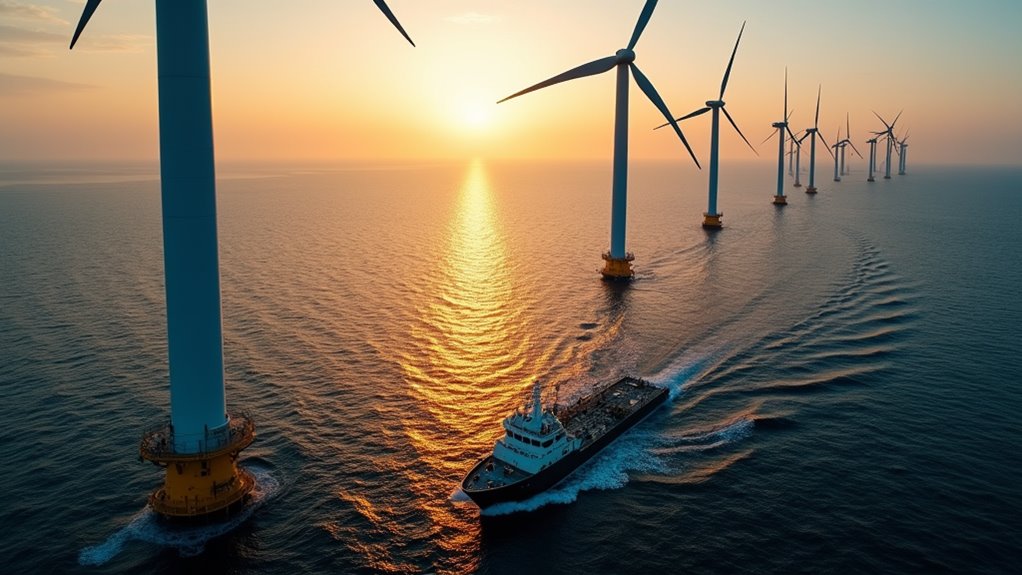
While offshore wind farms require substantial upfront investments, they’re proving to be powerful economic engines.
The expansion of offshore wind is creating thousands of jobs in manufacturing, construction, and maintenance.
You’ll see growing demand for offshore wind driving economic benefits across local economies, with projections showing 12% market growth through 2030.
The offshore wind sector’s also boosting maritime industries and port development.
Environmental Benefits and Marine Ecosystems
Beneath the churning waves, offshore wind farms serve a dual purpose that might surprise you. They’re not just power generators – they’re thriving artificial reefs. You’ll find these structures creating new habitats for marine life while helping reduce carbon emissions through decarbonization efforts.
| Environmental Aspect | Impact on Marine Life |
|---|---|
| Foundation Structure | Creates artificial reefs |
| Noise Management | Uses bubble curtains |
| Ecosystem Support | Increases fish populations |
| Biodiversity | Enhances marine habitats |
Growth Potential and Future Expansion Plans
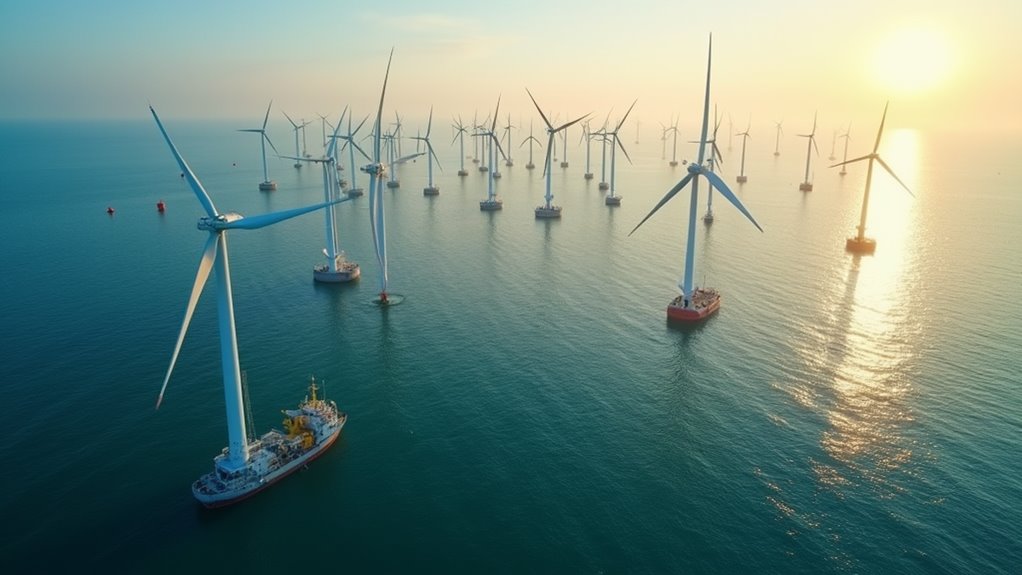
As nations worldwide embrace renewable energy solutions, offshore wind power stands at the brink of extraordinary growth.
The global power landscape is rapidly evolving, with offshore wind capacity expected to reach 271 GW by 2030.
You’ll see remarkable technological advancements in floating turbines, while major investment in wind from China and the UK’s ambitious future expansion plans are reshaping energy security worldwide.