
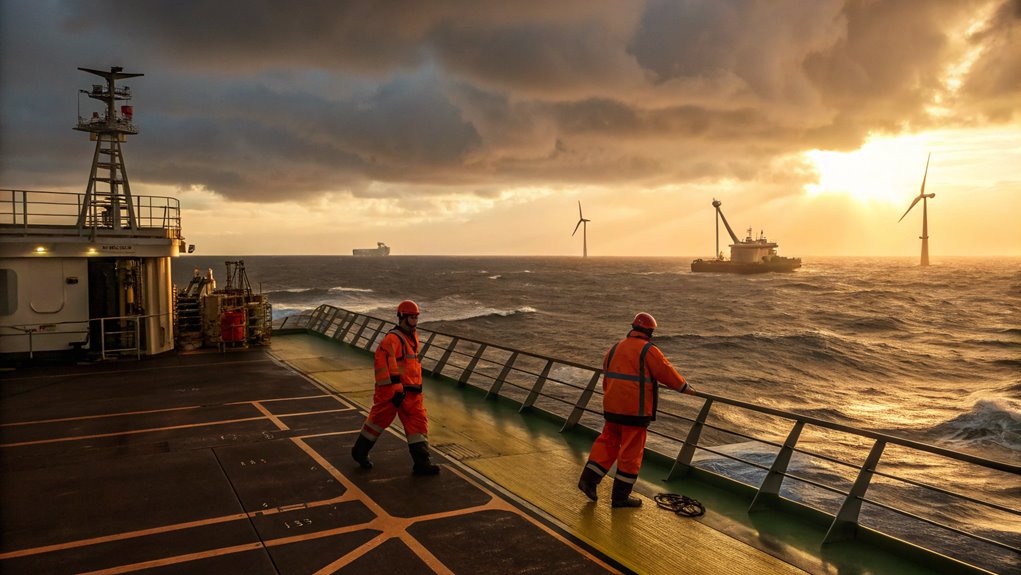
The North Sea's energy workforce stands at a critical crossroads. Over 200,000 skilled professionals who've powered the region's oil and gas sector now face an uncertain future as the industry shifts toward renewable energy. While the Energy Skills Passport scheme offers a path forward, the clock's ticking. The question isn't just about job security – it's whether we'll have enough talented hands to build our sustainable energy future.
The Energy Skills Passport is a crucial step in addressing this challenge. Launched with £3.7 million in funding from the Scottish Government's Just Transition Fund, it aims to help workers transition their training and accreditations from oil and gas jobs to similar roles in the renewables sector. This includes supporting workers to identify routes into roles in offshore wind, where over 100,000 jobs are expected by 2030.
"It is absolutely vital that we recognise and retain the considerable skills of oil and gas workers and ensure they are supported, as part of the Scottish Government's commitment to ensuring a fair and just transition for Scotland," according to Acting Cabinet Secretary Gillian Martin. This sentiment is echoed by industry experts who stress the urgency of the situation. As a business adviser highlighted, the transition to renewable and clean energy needs to speed up this year or risk losing the "transient" workforce in the North Sea.
This challenges highlights the importance of the North Sea Transition Taskforce, which brings together experts from various sectors to ensure a strategic transition from oil and gas to a renewable future, while safeguarding up to 200,000 jobs. The taskforce aims to provide a blueprint for stability for businesses, protect tens of thousands of skilled jobs, and guide the sector towards a sustainable future.
With the Energy Skills Passport and the North Sea Transition Taskforce, the UK is making strides towards ensuring a just and fair transition for the North Sea. However, the pace of this transition is crucial. The sooner these initiatives are fully operational, the better equipped we will be to retain the skills and expertise needed to build our sustainable energy future.
The North Sea's oil and gas industry faces an unprecedented challenge as it shifts towards renewable energy: the potential loss of its skilled workforce. In 2021, the offshore oil and gas industry supported 200,800 UK jobs; however, this workforce could shrink dramatically by 2030. Industry experts warn that 2025 is a vital year for showing real progress in the energy transformation to keep these experienced workers in the region.
A significant concern is that 90% of oil and gas workers have skills that could easily transfer to offshore renewables. These valuable professionals are already eyeing opportunities in other parts of the world, and once they leave, there's a good chance they won't come back to the North Sea. Clean Power 2030 aims to boost confidence in the renewable energy sector and retain skilled workers.
Recently, a new Energy Skills Passport scheme, backed by £3.7m in Scottish funding, has been launched to help workers shift to renewable energy jobs. This initiative comes at a critical time, as wind turbines, solar installations, and battery systems are becoming more complex and demanding more skilled workers.
According to Philip Rycroft, chair of the North Sea Transition Taskforce, "Each member brings a wealth of knowledge and experience to help us ensure a just, fair and strategic transition for the North Sea. By working together, we aim to provide Government with the blueprint for stability for businesses, protect tens of thousands of skilled jobs, and guide the sector and its critical energy assets towards a sustainable future."
Moreover, Shevaun Haviland, Executive Director of the Taskforce and Director General of the British Chambers of Commerce, underscores, "Reinforcing the important urgency of the Taskforce's work… we aim to provide a comprehensive analysis and developing a framework to ensure an equitable transition."
The UK's ambitious goal for clean power by 2030 requires swift action. The industry needs twice as much transmission network infrastructure in the next seven years as it built in the past decade. Without long-term government support and clear regulations, the UK risks losing not just workers but also the opportunity to lead in renewable energy.
The situation demands a coherent plan for the basin that recognises the climate imperative of phasing out oil and gas, prioritising the needs of workers, communities, and supply chain companies in the North Sea's transition, as highlighted by a recent analysis by climate campaign group Uplift.
The government has stressed the importance of a fair, orderly, and prosperous transition in the North Sea, aligned with climate and legal obligations, which drives towards a clean energy future of energy security, lower bills, and good, long-term jobs.
The North Sea's energy future hangs in the balance, and the clock's ticking. Long-term government support and clear regulations are essential to ensure that the skilled workforce remains in the region and that the UK can lead in renewable energy.